
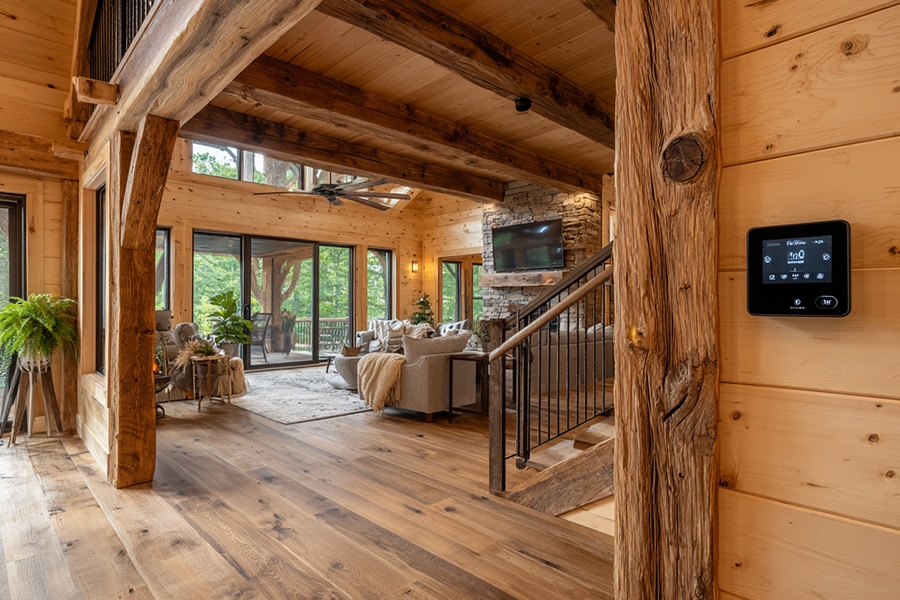

Energy Efficiency Tips for Tennessee Log Homes
Tennessee’s seasons are beautiful—but they can also be extreme. Sweltering summer humidity, sudden thunderstorms, and crisp Appalachian winters all put your home’s energy performance to the test. For log homeowners, building efficiently isn’t just a nice-to-have—it’s essential. The unique nature of log construction requires thoughtful material choices, precision joinery, and modern energy-efficient upgrades to maintain comfort, regardless of the season.
The good news? When properly built and maintained, log homes can be just as efficient—if not more so—than traditional stick-built houses. In this guide, we’ll explore energy efficiency tips tailored to Tennessee’s climate, focusing on insulation, sustainable wood choices, and smart building practices.
1. Choose the Right Wood Species
Certain woods naturally insulate better than others. Species such as Eastern White Pine and Cypress offer strong thermal performance and are well-suited for Tennessee’s humid summers and variable winter conditions.
- Eastern White Pine: Lightweight with good insulating properties, making it a great choice for walls and ceilings.
- Cypress: Naturally resistant to moisture, rot, and insects—ideal for areas like Middle and West Tennessee.
Using kiln-dried logs can also help prevent shrinkage and air leaks over time, improving thermal stability.
2. Use Tight Joinery and Foam Tape Seals
Gaps between logs are the enemy of efficiency. To minimize air infiltration:
- Use tongue-and-groove log profiles or double tongue-and-groove designs.
- Apply high-quality foam tape between log joints to maintain a tight seal.
- Caulk or chink where needed to fill any small gaps caused by settling or movement.
3. Upgrade Your Windows and Doors
Windows and doors are common points of heat loss. Choose:
- Double- or triple-pane windows with low-E coatings
- Properly sealed frames
- Wood doors with insulated cores
Install overhangs or awnings on south-facing windows to reduce heat gain in summer without sacrificing winter sun.
4. Insulate the Roof and Floor Properly
Log walls naturally insulate, but roofs and floors need extra attention. Use:
- Spray foam or rigid foam board insulation in the attic
- Insulated subfloor systems, especially if your log home is built on a crawlspace or pier foundation
5. Go Green with HVAC and Solar Options
Pair your well-insulated log home with smart, sustainable tech:
- High-efficiency HVAC systems
- Smart thermostats
- Solar panels or solar-ready roofing options for long-term savings
6. Choose Sustainable Materials
Wood is a renewable resource—but only when sourced responsibly. At East Tennessee Building Supply, we offer:
- Sustainably harvested logs
- Local and regional species to reduce transportation impact
- Low-VOC stains and sealers for better indoor air quality
7. Regular Maintenance Keeps Efficiency High
Even the most efficient log home needs care. Maintain tight seals and optimal performance by:
- Resealing logs every few years
- Cleaning debris from exterior seams and corners
- Re-checking insulation and seals before each season change
Build Smarter, Live Warmer
Tennessee’s natural beauty deserves a home that matches its charm without wasting energy. With smart planning and high-quality materials, your log home can be both cozy and environmentally friendly.
Contact East Tennessee Building Supply to explore energy-efficient options for your next project or renovation.
