
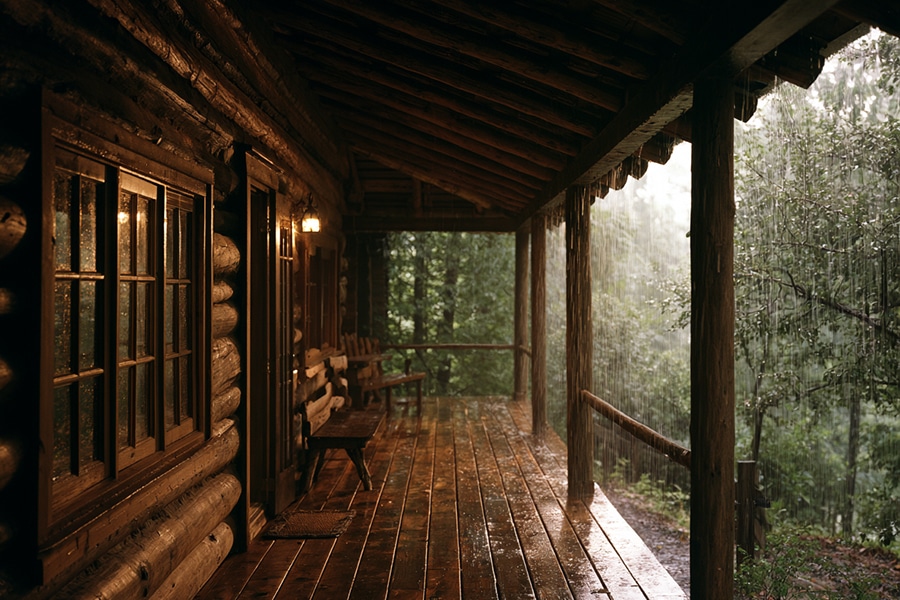

Why Deep Roof Overhangs Matter on Log Homes
When people admired a beautiful Tennessee log home, they often noticed the logs, the porch, the stone chimney, or the mountain views. One feature rarely received much attention, yet it quietly protected the entire structure year after year: the roof overhang.
Deep roof overhangs have been part of Appalachian building traditions for generations. Long before modern stains, flashing systems, and synthetic sealants existed, builders understood a simple truth: keeping water off the logs was one of the best ways to preserve a cabin. Today, that lesson remains just as important.
At East Tennessee Building Supply, we frequently see the difference overhangs make. Homes with properly designed roof extensions often experience less weathering, fewer moisture issues, and longer-lasting exterior finishes. They also tend to be more comfortable and energy efficient throughout the year.
What Is a Roof Overhang?
A roof overhang is the portion of the roof that extends beyond the exterior wall.
Its primary purpose is simple:
- Direct rainwater away from the structure
- Provide shade
- Protect windows and doors
- Reduce weather exposure
While a small overhang may look attractive, deeper overhangs often deliver significantly better performance for log homes.
Why Appalachian Builders Loved Deep Overhangs
Early Tennessee settlers learned quickly that the weather could be unforgiving.
Their cabins faced:
- Heavy spring rains
- Hot summer sun
- Winter snow and ice
- High humidity
Without modern protective products, builders relied on design.
Deep overhangs became one of their most effective tools.
Many historic cabins throughout East Tennessee featured overhangs extending several feet beyond the walls. Those extra inches dramatically reduced moisture exposure and helped many structures survive for generations.
Rain Protection: The Biggest Benefit
Water remains the number one enemy of wood structures.
A deep overhang helps by:
- Reducing direct rainfall on logs
- Limiting splashback
- Protecting chinking
- Keeping windows drier
- Reducing stain deterioration
During a typical Tennessee thunderstorm, walls protected by large overhangs receive far less water exposure than walls with minimal protection.
That means:
- Less maintenance
- Less moisture intrusion
- Longer-lasting finishes
Protecting Your Stain Investment
Exterior stain serves as a protective barrier, but even the best stain gradually wears down with constant exposure to the elements.
Deep overhangs help preserve stain by reducing:
- UV exposure
- Driving rain
- Surface moisture retention
- Weathering cycles
Homeowners often notice that walls under large overhangs maintain their appearance years longer than exposed walls.
This can significantly reduce re-staining frequency.
Summer Cooling Benefits
Roof overhangs don’t just protect the exterior.
They also improve indoor comfort.
During Summer
Deep overhangs:
- Block high-angle sunlight
- Shade windows
- Reduce heat gain
- Lower cooling costs
This is particularly important in East Tennessee, where July and August temperatures can be surprisingly intense.
Homes with properly designed overhangs often remain noticeably cooler during the hottest parts of the day.
Winter Advantages Too
Some homeowners worry that large overhangs block winter sunlight.
In reality, properly designed overhangs often improve seasonal performance.
Because winter sunlight enters at a lower angle, it can still reach windows beneath many overhangs while summer sun remains blocked.
The result:
- Cooler summers
- Brighter winters
- Improved energy efficiency
This passive design principle has been used successfully for centuries.
Protecting Doors and Windows
Doors and windows are among the most vulnerable points in any home.
Large overhangs help shield them from:
- Wind-driven rain
- UV damage
- Seal deterioration
- Moisture intrusion
This protection extends the life of:
- Caulk
- Weatherstripping
- Window trim
- Door finishes
Less exposure means fewer repairs.
Better Porch Experiences
Deep overhangs often create better porches.
A porch with generous roof coverage provides:
- More shade
- Better rain protection
- Increased comfort
- Longer furniture life
Many East Tennessee homeowners spend much of their spring, summer, and fall on covered porches. A few extra feet of roof coverage can dramatically improve usability.
Nobody enjoys abandoning the porch every time a brief mountain shower rolls through.
Snow and Ice Management
Winter weather presents unique challenges.
Overhangs help by:
- Directing runoff away from walls
- Reducing ice formation against logs
- Protecting entrances
- Limiting snow accumulation near windows
While overhangs aren’t a substitute for proper drainage, they contribute significantly to moisture control.
Wildlife Benefits
Birds, insects, and wildlife often prefer sheltered areas.
A properly designed overhang can help homeowners monitor and manage these spaces more effectively.
Protected areas are easier to inspect and maintain, helping identify issues before they become major problems.
Architectural Appeal
Beyond performance, deep overhangs simply look right on many Tennessee cabins.
They complement:
- Log homes
- Timber-frame structures
- Farmhouses
- Mountain homes
Architecturally, overhangs create:
- Visual depth
- Strong shadow lines
- Enhanced curb appeal
Many of the most photographed cabins in the Smokies feature substantial roof overhangs.
That’s not a coincidence.
Planning a New Build
If you’re designing a cabin or major addition, discuss overhang dimensions early in the planning process.
Consider:
- Sun exposure
- Roof pitch
- Window placement
- Porch design
- Climate considerations
It’s much easier to design proper protection from the start than to retrofit it later.
A Real East Tennessee Example
A homeowner near Townsend noticed that one side of his cabin required staining nearly twice as often as the other. The difference wasn’t the stain or the wood species.
The more weathered wall had minimal roof protection.
When he added a porch roof extension during a later renovation, the maintenance difference became immediately noticeable.
Many surviving Appalachian barns feature exceptionally deep roof overhangs. Farmers learned long ago that keeping rain off wood structures was often the simplest and most effective preservation strategy available.
Deep roof overhangs do far more than improve appearance. They protect logs, preserve stain, improve comfort, reduce maintenance, and extend the life of windows, doors, and porches. Tennessee log homes remain one of the smartest design investments a homeowner can make. With quality materials and planning assistance from East Tennessee Building Supply, homeowners can build structures that stay beautiful and durable for decades.
