

Those Beautiful Trees Come With Leaves
Late October is when East Tennessee really shows off.
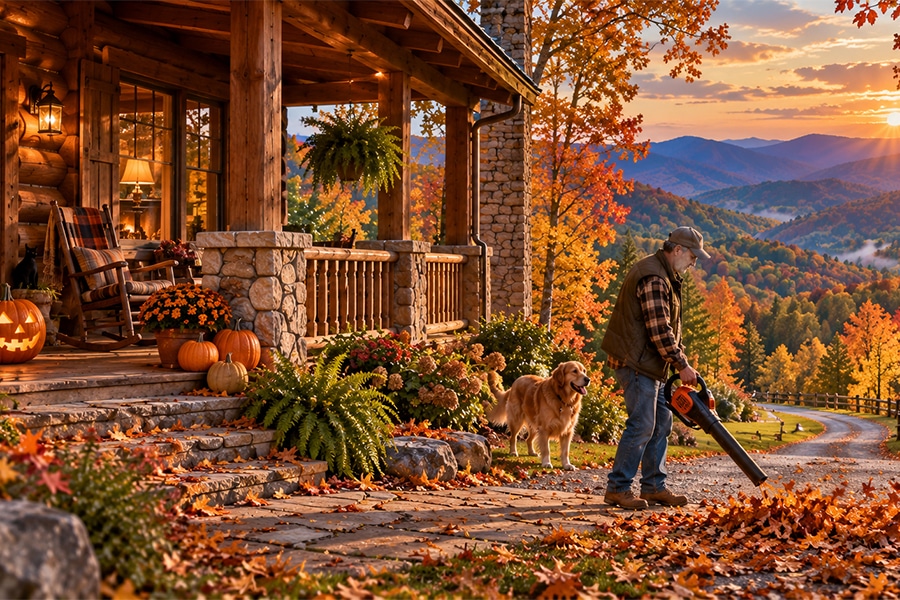
The mountains have traded summer green for reds, oranges and golds. Cool mornings make coffee taste better, fireplaces are returning to service, and a log home surrounded by hardwoods can look suspiciously like the photograph that convinced you to move here in the first place. Put a few pumpkins on the porch, add some mums beside the steps, and you’ve got a pretty convincing argument for never leaving.
Then the wind blows.
By lunchtime, the porch is covered in leaves. The driveway has disappeared beneath them, the gutters are collecting their annual harvest, and the beautiful oak beside the house has apparently decided that every leaf it grew this year belongs to you personally.
Welcome to October in East Tennessee.
This is one of the best times of year to own a log home here, but it’s also an important time to pay attention to the property. Winter is coming, summer growth is winding down, and falling leaves have an impressive ability to collect in exactly the places you’d prefer they didn’t.
Fortunately, fall maintenance doesn’t have to turn into an enormous annual project. Much of it is simply walking around the house and noticing what changed during the year. October gives you a perfect opportunity to catch small issues before cold weather arrives.
And since we’re doing this on October 25, we might as well acknowledge something else.
There are things considerably scarier than ghosts.
A gutter packed solid with wet leaves is one of them.
Those Gorgeous Trees Are Now Dropping Everything
Trees are one of the great pleasures of living in East Tennessee. They provide shade through summer, frame mountain views and put on an extraordinary show every autumn. By late October, however, much of that show has relocated from the branches to the ground.
Leaves around a log home aren’t automatically a problem. They’re part of living in the woods. The concern begins when wet leaves accumulate against exterior walls, around foundations or in places where they hold moisture.
Take a walk around the house and look for piles collecting against the structure. Pay particular attention to corners and sheltered areas where wind tends to deposit debris. Porch steps, decks and walkways deserve attention too, since wet leaves can become surprisingly slippery.
This is also a good time to look at shrubs and other landscaping near the house. Summer growth may have brought branches closer to the walls than they were in spring. Trimming vegetation back can improve access for inspection and prevent plants from constantly resting against exterior wood.
You don’t need to declare war on nature.
You’re just establishing property lines.
Look Up Before You Start Raking
The leaves on the ground are obvious.
The ones above your head deserve attention too.
Fall is a good time to look at trees near the house for dead limbs, damaged branches or other conditions that concern you. Summer storms may have weakened something that isn’t obvious until the canopy begins thinning.
Large-tree work isn’t a good place for enthusiastic amateur lumberjacking. If you’re concerned about the condition of a tree near the house, driveway or utility lines, consult a qualified tree professional.
The goal isn’t to remove every tree that could possibly drop a branch. That would defeat much of the reason for owning a wooded property. It’s about identifying obvious hazards and managing the landscape thoughtfully.
Trees give you shade in August and color in October.
They occasionally send invoices.
Your Gutters Have Been Waiting for This Moment
If your log home sits beneath mature hardwoods, gutters can collect an astonishing amount of material during fall.
Leaves, twigs and other debris can interfere with drainage. Instead of moving water efficiently away from the roof, clogged gutters may overflow during rain. That water can end up running down exterior surfaces or collecting near areas you’d rather keep dry.
Downspouts matter just as much. Water leaving the roof should have a sensible route away from the house. Look at where each downspout discharges and make sure leaves haven’t blocked the outlet.
While you’re thinking about gutters, remember that working from a ladder carries real risks. A steep roof and a two-story log home are not the place to discover your hidden talent for acrobatics. If cleaning or inspection can’t be done safely from the ground, hire someone properly equipped for the job.
Halloween is approaching.
There is no reason to audition for the role of Person Who Fell Off the Ladder.
October Rain Can Tell You a Lot
A rainy fall day may spoil your plans for the porch, but it can provide useful information about the house and property.
Watch what the water does.
Look at how it leaves the roof and moves through gutters and downspouts. Notice where runoff crosses the yard and whether water is collecting near the foundation. Check the driveway for erosion or places where drainage channels have become blocked by leaves.
This is especially useful on sloping East Tennessee property. Water follows gravity regardless of what your landscaping plan says it should do. A drainage path that worked well in summer can behave differently after falling leaves begin clogging culverts or channels.
You don’t need to stand outside during a thunderstorm to investigate. Wait until conditions are safe, then take a walk around the property.
Spring rain showed you how the property handles water when vegetation is waking up.
Fall shows you what happens when everything starts dropping into the drainage system.
Give the Logs an Autumn Walkaround
Late October is also a natural time to inspect the exterior wood.
Walk slowly around the house and look at the walls from different angles. Pay attention to areas around windows and doors, beneath rooflines and anywhere water tends to splash or collect.
You’re looking for changes rather than expecting the entire exterior to appear identical. Different sides of a house experience different amounts of sunlight, wind and rain. A protected wall beneath a deep porch may age differently from one exposed to afternoon weather.
Look at the condition of exterior finishes and sealants. If something appears cracked, separated or unusually weathered, determine whether it needs attention. The appropriate maintenance schedule depends on the materials, products and exposure involved.
This is where knowing your own house becomes valuable.
After a few years, you’ll recognize what’s normal.
Anything that suddenly looks like it belongs in a haunted house deserves a closer inspection.
Check Around Windows and Doors
October mornings can provide the first reminder that cold weather is coming.
A room that felt perfectly comfortable all summer may suddenly reveal a draft. That makes fall a useful time to check around windows and exterior doors.
Look for obvious gaps, damaged weatherstripping or sealant that has deteriorated. If a door isn’t closing properly, investigate rather than assuming you’ll simply live with it until spring.
Small air leaks can affect comfort once colder weather arrives. They may also give insects an invitation to move indoors as temperatures fall.
And let’s be clear about priorities.
A plastic skeleton on the porch is festive.
A large spider unexpectedly appearing beside your pillow at 2:00 in the morning is a completely different Halloween experience.
The Porch Needs a Seasonal Reset
Your porch worked hard this year.
It handled spring rain, summer heat, cookouts, morning coffee and probably at least a few remote-work sessions. By late October, its job is beginning to change.
Sweep away leaves and debris, especially where they accumulate against walls or beneath furniture. Check outdoor rugs after wet weather and make sure they aren’t staying damp for extended periods. Look over railings, steps and decking while you’re already out there.
This is also the time when summer furniture begins negotiating its winter contract. Some pieces may stay outside under cover, while cushions and other weather-sensitive items move into storage.
You don’t have to empty the porch completely.
October may offer some of the best porch weather of the year.
Keep the rocking chairs.
Add pumpkins.
We have standards.
Don’t Let Firewood Become Part of the House
Cool evenings mean fireplaces and woodstoves begin returning to service.
If you burn wood, think carefully about where you store it. A stack directly against the house may be convenient, but it can also hold moisture and provide shelter for insects.
Keeping firewood appropriately separated from exterior walls makes the area easier to inspect. It also reduces the chance of bringing unwanted passengers inside with every armload.
Store wood where it can remain reasonably dry and accessible without turning the side of the house into permanent storage.
You can still keep a small amount convenient for the evening fire.
Just inspect it before bringing it inside.
October decorations should be the only creepy-crawlies you’re deliberately inviting onto the property.
Clean Up Around the Outdoor Equipment
Summer equipment has a habit of spreading.
Garden tools migrate toward the porch. Hoses remain connected because you’ll certainly need them one more time. Grills collect accessories, and outdoor furniture gradually occupies every available corner.
Late October is a good time to restore some order.
Put away equipment that won’t be needed through winter. Clean garden tools before storing them and deal with hoses before freezing weather arrives. Make sure outdoor equipment isn’t blocking drainage paths or leaning against exterior walls.
If you have irrigation equipment or other seasonal systems, follow the manufacturer’s recommendations for preparing them for colder weather.
This isn’t glamorous maintenance.
But neither is discovering a frozen garden hose in January.
Take a Look at the Driveway Before Winter
A long gravel driveway through the woods is one of those features that looks fantastic in photographs.
It also requires a relationship.
By October, summer storms may have created ruts or washed gravel into places where it doesn’t belong. Falling leaves can hide drainage channels and culverts. Areas that seem insignificant in dry weather may become more troublesome during winter rain or freezing conditions.
Walk or drive the entire route slowly and look at how water moves alongside it. Clear leaves and debris from drainage areas where appropriate. If erosion has become significant, deal with the cause rather than repeatedly replacing gravel.
Remember that the driveway isn’t simply decorative. It’s how you, delivery drivers and emergency vehicles reach the house.
A winding mountain lane is charming.
A winding mountain lane that’s slowly becoming a creek is less charming.
Your Home Office Is Changing Seasons Too
Remote workers notice seasonal changes in ways commuters sometimes don’t.
You’re home during the middle of the day, watching sunlight move across the office and leaves disappear from the trees outside. A workspace that was heavily shaded in July may suddenly receive much more direct light in October.
That can be wonderful.
As deciduous trees lose their leaves, views may open across the property. Rooms can feel brighter, and a mountain ridge hidden behind summer foliage may reappear outside your window.
The temperature inside the office may change too. You may discover a draft around a window or notice that afternoon sunlight now reaches your desk.
This is a good time to make small seasonal adjustments. Move a chair, change the blinds or reposition the desk lamp. The room doesn’t have to function exactly the same way in October as it did in July.
That’s part of the appeal.
Your office has seasons too.
Wildlife Is Also Making Fall Plans
You’re not the only one preparing for colder weather.
Mice, insects and other small creatures may begin looking for protected places as temperatures drop. A warm house is attractive real estate.
Inspect obvious openings around the exterior, including places where utilities enter the building. Look around doors and other potential access points. Keep stored materials organized so you can see what’s happening around them.
This is another reason to avoid allowing leaves, firewood and miscellaneous outdoor items to pile against the house. Clear space makes inspection easier and gives critters fewer convenient hiding places.
Living near woods means sharing the landscape with wildlife.
The arrangement works best when everyone understands which side of the wall belongs to whom.
Give the Fireplace Some Attention Before the First Big Fire
Few things fit an East Tennessee log home better than a fire on a cold evening.
Before fireplace season gets fully underway, make sure the system is ready to use safely. Chimneys and fireplaces should be inspected and maintained as appropriate for the type of system you have and how frequently it’s used.
Don’t wait until the first genuinely cold Saturday night to discover a problem.
The same applies to smoke alarms and carbon monoxide alarms. Follow manufacturer guidance for testing and replacement, and make sure appropriate alarms are present where required.
Safety equipment doesn’t interfere with the rustic atmosphere.
Ideally, you barely notice it.
That’s preferable to suddenly wishing you’d paid more attention to it.
October Is Really About Getting Ahead of November
Fall maintenance can sound like a giant checklist, but most of it comes down to observation.
Look up at the roofline.
Look down at the drainage.
Look at the logs, windows, doors and landscaping.
Notice what’s changed.
The advantage of doing this in October is that the weather is usually far more cooperative than it will be later. Fixing a small issue on a pleasant fall afternoon is considerably nicer than discovering it during freezing rain.
It also gives you a reason to spend time outside during one of East Tennessee’s most beautiful months.
Admittedly, raking leaves wasn’t the outdoor recreation you had in mind when you moved here.
Consider it the admission price.
The Leaves Are Part of the Deal
At some point in late October, you’ll finish whatever maintenance you intended to accomplish that day.
The gutters are clear. The leaves have been moved somewhere sensible. The porch is swept, the firewood is ready and you’ve walked around the house enough times to know that everything looks the way it should.
Then you’ll put the rake away.
A breeze will move through the trees.
Six thousand additional leaves will immediately land where you just cleaned.
Don’t take it personally.
At East Tennessee Building Supply, we provide the materials that give log homes their character. Milled logs, log siding, tongue-and-groove, beams, flooring, railings and trim all become part of a home designed to live comfortably among those Tennessee trees.
And those trees are worth the trouble.
In summer, they shade the house. In October, they turn the mountains into something spectacular. A few weeks later, their bare branches open views that have been hidden since spring.
For one glorious month, though, they cover everything you own in leaves.
Put a pumpkin on the porch. Light the fireplace when evening gets cool. Enjoy the color while it lasts.
And don’t be frightened by that scratching sound outside.
It’s probably just another leaf landing in the gutter.
Probably. 🎃
