
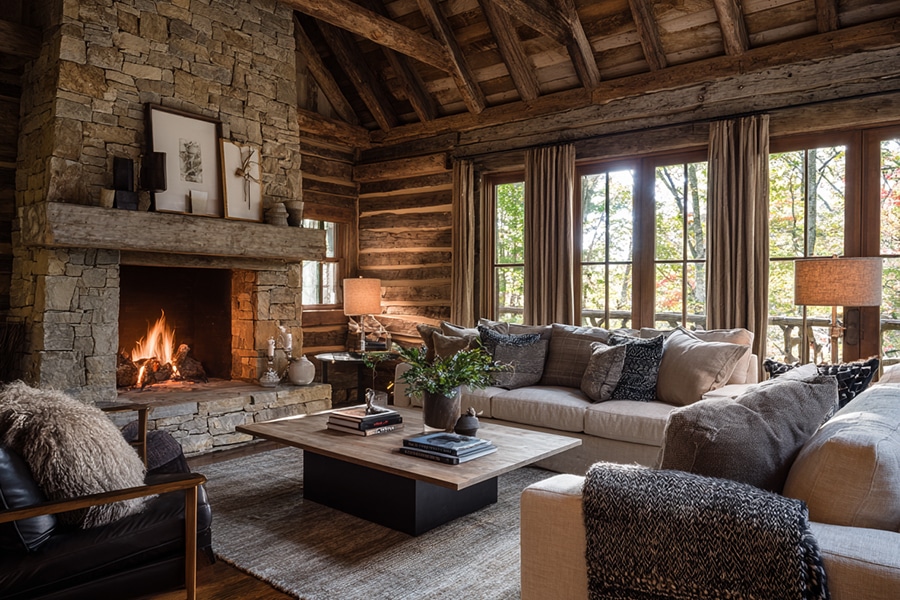

Interior Design Tips for Log Home Living Rooms in Tennessee
Creating a Space That Feels Cozy, Open, and Truly Yours
There’s something special about a log home living room. It’s where the warmth of natural wood meets the comfort of everyday living—where mornings start with coffee by the window and evenings end by the fire.
But designing that space? That’s where things can get tricky.
Too much wood can feel heavy. Too little contrast can make it feel unfinished. The goal is finding that sweet spot where your living room feels warm, balanced, and inviting—without looking like a time capsule from 1985.
Let’s walk through how to get it right.
Start with the Wood (Then Build Around It)
In a log home, the wood already does much of the visual work. Walls, beams, ceilings—it’s all part of the design.
Instead of competing with it, your goal is to support and balance it.
Key Approach:
- Let the wood be the backdrop
- Avoid overmatching everything
- Introduce contrast in smart ways
💡 Think of wood as your canvas—not your entire color palette.
Balance Light and Dark Tones
One of the biggest design mistakes in log homes is going too dark—or too light.
What Works Best:
- Light wood walls + darker furniture
- Dark beams + lighter rugs and upholstery
- Neutral base tones with layered textures
Color Ideas That Work in Tennessee Homes:
- Warm whites and creams
- Earth tones (sage, clay, soft browns)
- Charcoal or matte black accents
- Deep greens or navy for contrast
This keeps your space from feeling flat while still honoring the natural materials.
Furniture: Keep It Comfortable, Not Clunky
Log homes call for comfort—but that doesn’t mean oversized everything.
Furniture Tips:
- Choose clean-lined sofas over bulky, overstuffed pieces
- Mix materials (leather, fabric, wood, metal)
- Avoid “all log furniture”—it’s too much of a good thing
Layout Checklist:
- Anchor seating around a focal point (fireplace or view)
- Keep walkways open (important in open-concept homes)
- Use area rugs to define spaces
Comfort wins—but balance keeps it stylish.
Lighting: The Game-Changer Most People Miss
Lighting can make or break a log home interior.
Layer Your Lighting:
- Overhead (chandeliers, recessed lighting)
- Task lighting (floor and table lamps)
- Accent lighting (wall sconces, uplighting beams)
Popular Choices:
- Wagon wheel or iron chandeliers
- Edison bulb fixtures
- Warm LED lighting (avoid harsh white tones)
💡 If your lighting feels too dim or too yellow, the whole room will feel dated.
Use Texture to Break Up the Wood
When everything is wood, you need texture to create contrast.
Add These Elements:
- Woven rugs
- Linen or cotton throws
- Leather furniture
- Stone fireplaces
- Metal accents (iron, steel, bronze)
This keeps the room feeling layered instead of one-note.
Make the Fireplace the Star (If You Have One)
In most Tennessee log homes, the fireplace is the natural focal point.
Design Around It:
- Use stone or contrasting materials
- Add a wood mantle with character
- Keep décor simple—don’t overcrowd
Position seating so it naturally draws people in. That’s where the “living” happens.
Bring the Outdoors In
One of the biggest advantages of a Tennessee log home? The surroundings.
Tie Your Interior to the Exterior:
- Use large windows whenever possible
- Keep window treatments minimal
- Add plants or natural décor elements
- Echo outdoor colors inside
Your view is part of your design—don’t block it.
Avoid These Common Log Home Mistakes
🚫 Too Much Wood
Everything matching = overwhelming. Break it up.
🚫 Overly Themed Decor
Skip the “cabin overload” (no need for 12 moose pillows).
🚫 Poor Lighting
Dim lighting can make beautiful wood feel dull.
🚫 Cluttered Layouts
Open space is your friend—especially with vaulted ceilings.
Simple Upgrades That Make a Big Impact
You don’t need a full redesign to improve your space.
Quick Wins:
- Swap outdated light fixtures
- Add a large area rug
- Replace heavy curtains with lighter options
- Introduce a few modern accent pieces
- Update pillows and throws seasonally
Small changes can completely shift the feel of the room.
Comfort First, Style Second (But You Can Have Both)
The best log home living rooms don’t feel staged—they feel lived in.
They’re warm without being heavy. Stylish without trying too hard. And most importantly, they reflect the people who live there.
If your space feels comfortable, balanced, and welcoming—you’ve done it right.
Early log homes had just one main room—everything from cooking to sleeping happened in the same space. Today’s open-concept living rooms? Same idea… just a lot more comfortable.
