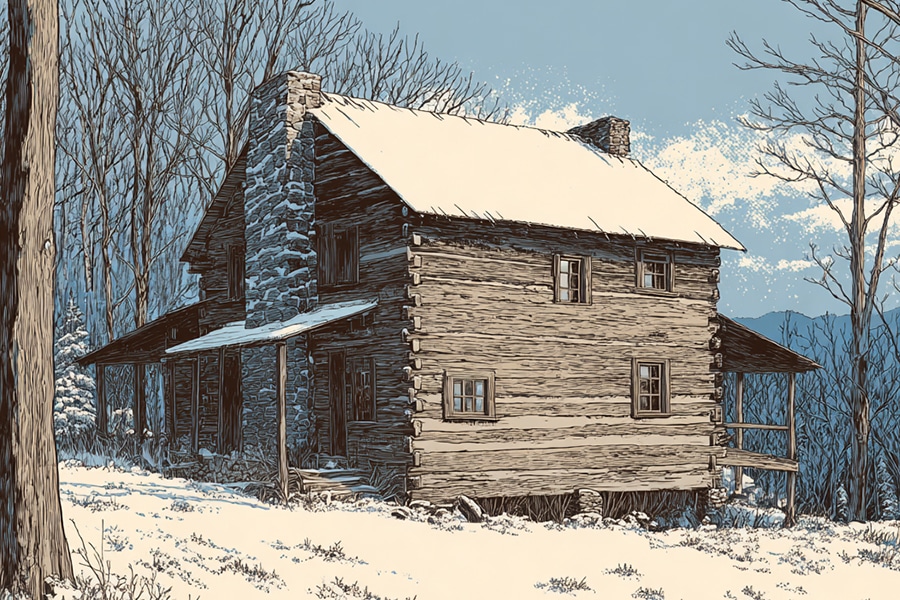
Log homes settled. That fact surprised first-time owners, especially those coming from traditional stick-built houses. In East Tennessee, where humidity, temperature swings, and seasonal moisture shifts were part of everyday life, settling wasn’t just expected — it was designed into a properly built log home. The challenge was distinguishing between healthy settling and warning signs that needed attention.
At East Tennessee Building Supply, February was when these questions appeared most often. Winter cold tightened logs, spring moisture loomed ahead, and homeowners started noticing small changes they hadn’t seen before. Most of the time, everything was fine. Sometimes, though, the house was asking for a little help.
Why Log Homes Settle in East Tennessee
Logs were natural materials. Even after milling and drying, they continued to respond to the environment. East Tennessee’s climate sped that process along.
Several factors influenced settling:
Moisture content in the logs
Seasonal humidity changes
Temperature swings
Log profile and thickness
Fastener type and placement
Sealing methods between courses
As logs dried and adjusted, they compressed under their own weight. A well-built log home allowed that movement to happen evenly and predictably.
What Normal Settling Looked Like
Normal settling usually happened gradually over the first few years. It was subtle and didn’t interfere with the home’s function.
Common, Normal Signs
Small gaps that appeared and then stabilized
Hairline cracks along log faces
Minor creaks or pops during temperature changes
Slight compression at chinking lines
Windows and doors that still opened and closed smoothly
These changes meant the home was doing what it was designed to do. Builders accounted for this movement during construction by using the right fasteners, slip joints, and sealing materials.
In many cases, homeowners didn’t need to do anything at all.
What Was Not Normal and Needed Attention
Some signs pointed to uneven settling or structural stress. These were the issues that shouldn’t be ignored.
Warning Signs
Doors or windows suddenly sticking or going out of square
Large gaps opening unevenly between logs
Chinking pulling away in long sections
Interior trim separating noticeably
Logs twisting or bowing
Visible daylight through exterior seams
Drafts that appeared suddenly
These symptoms often showed up after a cold winter or wet season. They didn’t always mean major damage, but they did mean something needed to be adjusted.
The Role of Fasteners in Settling
Fasteners controlled how a log home settled. Homes built with proper log screws settled evenly and stayed tight. Homes built with undersized screws, nails, or inconsistent fastening patterns often showed uneven movement.
Log screws:
Allowed controlled compression
Maintained structural alignment
Reduced twisting and bowing
Kept walls tight during seasonal shifts
When fasteners were too short or spaced incorrectly, the logs moved independently instead of together. That’s when gaps, stress points, and misalignment appeared.
Upgrading fasteners was one of the most common fixes we saw — and often one of the simplest.
Foam Tape and Gaskets: The Unsung Heroes
Settling wasn’t just about structure. Air sealing mattered too.
Closed-cell foam tape and gaskets:
Compressed as logs settled
Filled micro-gaps
Prevented drafts and moisture intrusion
Reduced noise during movement
Without proper sealing materials, even normal settling could feel like a problem. Drafts and cold spots made homeowners think something was wrong when the structure itself was sound.
Chinking and Settling Go Hand in Hand
Chinking was designed to move with the logs, not fight them. Modern chinking products stretched and flexed, but they still had limits.
Normal behavior:
Minor surface cracking that stabilized
Slight compression at joints
Problem behavior:
Chinking tearing away from logs
Deep cracks opening repeatedly
Sections pulling loose entirely
When chinking failed, it often pointed to uneven settling underneath. Fixing the root cause prevented repeat repairs.
Windows, Doors, and Settling Space
Log homes needed room to move around openings. Properly built homes included settling space above windows and doors, hidden behind trim.
When that space was missing or blocked:
Frames took on load they weren’t designed for
Windows stuck
Doors warped
Glass stress increased
February was a good time to check trim around openings and confirm settling space was still doing its job.
Seasonal Changes vs Structural Issues
One tricky part of diagnosing settling was timing. Some changes only showed up during cold snaps or wet periods.
A good rule:
If the issue appeared suddenly and corrected itself as temperatures normalized, it was likely seasonal.
If it worsened over time or didn’t improve, it needed attention.
Keeping a simple note of when changes appeared helped homeowners track patterns.
When to Act and When to Monitor
Act Now If You See
Water intrusion
Active air leaks
Structural misalignment
Rapidly growing gaps
Monitor If You See
Minor cosmetic cracking
Stable hairline gaps
Light chinking compression
Catching issues early almost always reduces repair scope and cost.
A Common East Tennessee Scenario
A homeowner near Newport noticed a door rubbing every February, but it was working fine by April. The cause turned out to be seasonal log compression combined with dry winter air. A small adjustment to fasteners and additional foam tape solved the problem permanently. No major rebuild. Just the right fix at the right time.
East Tennessee Trivia
Early Appalachian cabins often used adjustable wooden pegs to manage settling. Builders would tighten them seasonally — an early version of today’s log screw systems.
Recap
Settling was a natural part of log home life, especially in East Tennessee’s shifting climate. Small changes were normal. Sudden or uneven movement wasn’t. Knowing the difference helped homeowners act confidently instead of guessing. With the right fasteners, foam tape, chinking, and guidance from East Tennessee Building Supply, log homes settled safely, stayed tight, and aged exactly the way they were meant to.