
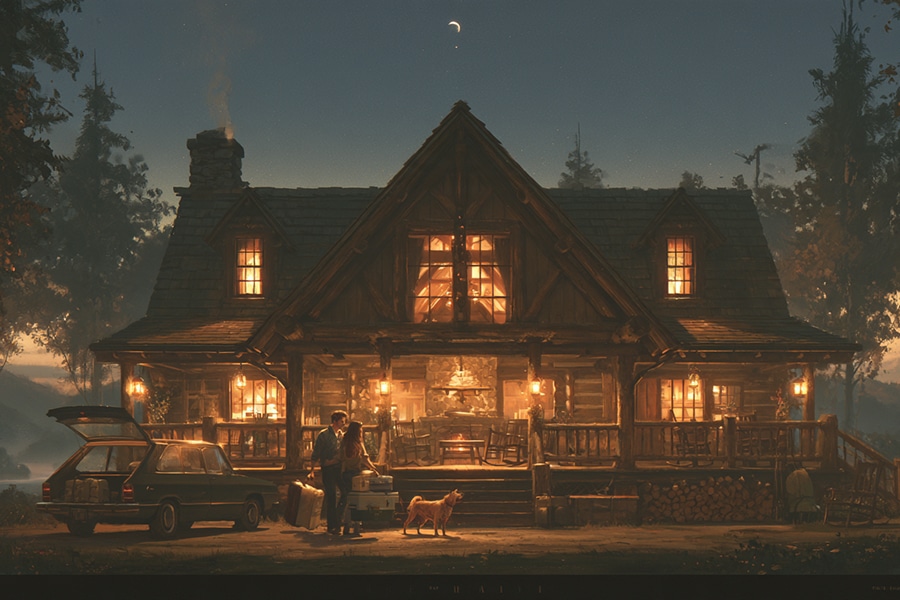

Designing an East Tennessee Getaway You’ll Actually Use
September can be a dangerous month to spend a week in East Tennessee.
The summer heat has started to loosen its grip. Mornings can feel a little cooler. The first hints of fall aren’t far away, and before long the mountains and hardwood forests will begin their annual color show. You rent a cabin for a long weekend, sit outside with coffee one morning and have a thought that has probably launched more than a few real-estate searches:
“Why do we keep renting one of these? Maybe we should have our own.”
And just like that, the vacation becomes research.
Owning an East Tennessee vacation cabin or second home can be a wonderful idea. It gives you a familiar place to escape to, a gathering spot for family and friends, and potentially a home that becomes increasingly important as retirement approaches. Instead of packing for someone else’s cabin, you get to leave your favorite coffee mugs in the cupboard, your hiking boots by the door and your fishing gear exactly where you want it.
But there’s an interesting trap hidden inside the dream.
People sometimes design a vacation home as though they’re building a smaller version of their primary residence. In reality, the best second homes often work differently. You arrive differently. You entertain differently. You spend your time differently. And if you’re only there periodically, the house needs to behave itself while you’re gone.
So before deciding how many bedrooms you need or which direction the great room should face, it’s worth asking a simpler question:
What would make you actually use this place?
Start With the Reason You’re Coming to East Tennessee
This sounds obvious, but it can completely change the house.
If the primary attraction is hiking and exploring the mountains, your cabin may need a good mudroom, easy equipment storage and an outdoor area where dirty boots don’t immediately become an interior-design feature.
If you’re coming for fishing and boating, storage takes on a different meaning. Rods, life jackets, coolers, paddles and wet clothing all need somewhere to go.
Maybe you’re not coming to do much of anything.
That’s perfectly legitimate too.
For some people, the entire point of owning a cabin is to disappear for three days, cook something good, read on the porch and watch the mountains change color. If that’s your version of vacation, spending a larger portion of the budget on a great porch, fireplace and comfortable living area might make far more sense than building extra rooms you’ll rarely enter.
A second home should be unusually personal because it doesn’t have to satisfy every requirement of your everyday life.
Your primary house may need to be close to work, school, shopping and dozens of obligations.
A getaway gets to be built around what you want to do when those obligations stop.
The Best Vacation Cabin May Not Be the Most Remote One
Seclusion is intoxicating when you’re shopping for a cabin.
You follow a winding mountain road, turn onto an even smaller road, climb another hill and finally reach a property surrounded by trees with no other house in sight.
Sold!
Well…maybe.
Before committing, make the drive a few more times.
Make it after dark.
Think about arriving at 9:30 on a Friday night after several hours on the interstate. Imagine doing it in heavy rain. Think about friends finding the property for the first time. Consider grocery runs, restaurants, medical care and whatever recreational activities brought you to the area.
A vacation property can absolutely be remote if that’s what you want. But accessibility can have a surprisingly large effect on how often you actually go there.
If every weekend trip requires a major logistical operation, you’ll probably make fewer weekend trips.
Sometimes the sweet spot isn’t complete isolation. It’s a property that feels wonderfully removed once you’re sitting on the porch but doesn’t require Indiana Jones to reach it.
Design for Friday-Night Arrival
Here’s a useful way to imagine your second home.
It’s Friday.
You’ve worked all week. You’ve been in the car for hours. It’s dark. Everyone is tired. You pull into the driveway carrying groceries, bags, jackets, possibly a dog and whatever else accompanies your family on a weekend away.
What happens next?
That’s a design problem worth solving.
A convenient entrance near parking can be far more important in real life than a dramatic formal entrance nobody uses. Good exterior lighting matters. A mudroom or drop zone gives bags and shoes somewhere to land. A nearby pantry makes unloading groceries easier.
If the cabin is elevated or built on sloping terrain, think carefully about how many steps separate the parking area from that everyday entrance.
Nothing kills the romance of a weekend getaway quite like carrying three coolers up 47 stairs in the dark.
The best vacation homes make arrival easy.
You unlock the door, put down the bags, turn on a few lights and within ten minutes you feel like you’re there.
Put the Money Where You Spend the Time
This is where vacation-home design can be liberating.
You don’t necessarily need all the rooms you expect in a primary residence.
Do you need a formal dining room?
Probably not if everybody naturally gathers around the kitchen island or a big farmhouse table.
Do you need an enormous primary bedroom?
Maybe you’d rather put those square feet into the great room.
Do you need four equally large bathrooms?
Perhaps not.
Instead, think about where people gather.
In many East Tennessee cabins, that’s the great room, kitchen and porch. Those spaces form the social heart of the home, particularly when several couples or generations visit together.
That’s where beautiful wood products can really shine. Exposed beams can give the great room scale and character. Tongue-and-groove can make a ceiling feel finished and warm. Wood flooring can visually connect open spaces. A substantial fireplace can anchor the room.
You don’t need to use every rustic idea you’ve ever seen in the same house.
Choose a few great ones and give them room to breathe.
Don’t Build a Cabin So Rustic That You Need a Flashlight at Noon
Traditional cabins can be wonderfully cozy.
They can also become dark.
A room with log walls, dark flooring, a dark wood ceiling, dark beams, dark cabinets and dark furniture may eventually cross the line from “warm mountain retreat” into “we appear to be living inside a walnut.”
A contemporary East Tennessee log cabin can keep all the warmth and character of wood while allowing in plenty of natural light.
Large windows are an obvious solution, especially when there’s a view worth capturing. But finishes matter too. Lighter wood tones, stone, painted surfaces, metal and neutral fabrics can provide contrast.
Even drywall can work beautifully alongside logs or log siding.
There’s no rule requiring every visible surface of a log home to be made from a tree.
In fact, mixing materials can make the wood features you choose feel more special.
Make the Porch Earn Its Square Footage
A vacation cabin in East Tennessee without a good porch feels like somebody forgot something.
But simply having one isn’t enough.
Think about how you’ll use it.
September is actually a wonderful month for imagining this because outdoor living is still very much part of the experience while cooler evenings begin hinting at fall.
Would you eat breakfast outside?
Do you want enough room for a dining table?
Will people gather around a fire?
Would you use a screened portion?
Does the porch face the best view?
Is it deep enough to remain comfortable when rain blows in?
How does it connect to the kitchen?
One of the smartest things you can do is treat the porch as an actual room during the planning process. Give it a purpose, furniture layout and traffic flow rather than drawing a rectangle around the outside of the house and calling it outdoor living.
For many vacation homes, a well-designed covered porch will get more use than an extra indoor room.
And nobody ever complained that the mountain view made the porch feel too small.
Bedrooms Can Be Smaller When Gathering Spaces Are Better
This is another place where second homes differ from primary residences.
Guests don’t necessarily need enormous bedrooms when they’re spending most of their waking hours together.
A comfortable bedroom needs a good bed, sensible storage, room to move and enough privacy to feel like a retreat at the end of the day.
That’s about it.
Those saved square feet can go toward the kitchen, great room, porch or another gathering area.
If children or grandchildren visit frequently, bunk rooms can be particularly efficient and fun. They don’t have to resemble summer camp, either. Thoughtfully designed built-in bunks can create plenty of sleeping capacity without requiring several additional bedrooms.
Just remember that sleeping capacity and bathroom capacity are related.
A cabin advertised—at least to your family—as sleeping twelve becomes considerably less impressive at 8:00 Saturday morning if it has one bathroom.
Storage Becomes More Important When You Aren’t There Every Day
A second home works best when you don’t have to pack your primary house into the car every time you visit.
Leave things there.
That’s one of the joys of owning the place.
Keep basic clothing, toiletries, kitchen supplies, linens and recreational equipment at the cabin. Give fishing gear, hiking equipment, games and outdoor supplies permanent homes.
Then when Friday afternoon arrives, you can get in the car and go.
That requires storage.
Not necessarily enormous walk-in closets everywhere, but smart storage positioned where it’s useful. A bench with storage near the entrance can swallow outdoor gear. A locked owner’s closet can be valuable if other people use the house. Shelving in a garage or utility area can hold seasonal equipment.
If you have kayaks, bicycles or substantial outdoor gear, solve that storage problem on the blueprint.
A kayak makes a terrific recreational accessory.
It’s considerably less effective as living-room décor.
Think About What the Cabin Does While You’re Gone
Your vacation home has another life.
The one it lives when nobody is there.
A primary residence usually has someone around to notice a dripping faucet, fallen branch, power outage or strange noise.
A second home might sit empty for days or weeks.
That makes durability and sensible design particularly important.
Choose materials and finishes with maintenance in mind. Pay attention to drainage around the home. Keep landscaping from creating unnecessary moisture against wood surfaces. Think about roof design and how water moves away from the structure.
Remote monitoring technology can also be useful. Depending on the systems you choose, homeowners can monitor temperature, security or other conditions while away.
The objective isn’t to spend every vacation checking an app.
It’s to enjoy the drive down knowing the house probably hasn’t been throwing a party without you.
Should You Build for Yourself or Future Renters?
Some owners want their vacation cabin to remain completely private.
Others may consider renting it occasionally.
Still others are purchasing primarily as an investment property.
Those are three different projects.
If short-term rental use is part of your plan, investigate the applicable local rules and restrictions before purchasing property or designing the home. Requirements can differ depending on the jurisdiction and location, and rules can change.
Then consider how rental use changes the house.
Durability may matter more. Owner storage becomes important. Parking needs may change. Bedroom and bathroom counts can affect how the property functions for groups.
But there’s a caution here.
If you’re primarily building a second home for yourself, don’t optimize every decision around hypothetical renters.
You can accidentally end up owning a very efficient miniature hotel that doesn’t feel particularly like your cabin.
Know which goal comes first.
Could This Vacation Cabin Become Your Retirement Home?
This is the question I’d ask anyone building a second home in their 50s or 60s.
You may have no intention of moving permanently today.
Ten years from now?
East Tennessee has a way of growing on people.
If there’s even a reasonable possibility that your vacation cabin could eventually become your primary residence, make a few decisions now that keep that option open.
A main-floor bedroom and full bathroom can become enormously valuable later. So can laundry on the main level. Think about parking and everyday access. Consider whether there’s enough storage for full-time living.
You don’t have to turn the vacation cabin into your retirement home today.
Just avoid designing it so that becoming one would require major reconstruction.
A little flexibility now can preserve a very attractive option later:
“What if we just stayed?”
Let September Help You Design It
September is a wonderful time to think about owning an East Tennessee cabin because you’re standing at the intersection of seasons.
Summer isn’t quite finished.
Fall isn’t quite here.
You can imagine long afternoons outside and cool evenings around a fire.
Soon the hardwoods will explode into color. A few months later, bare trees may reveal mountain views hidden all summer. Spring will bring everything back to life again.
When you’re evaluating property or planning the home, imagine it in all four seasons.
Where does the sun fall?
What happens to the view when leaves return?
Where would you sit on a cool evening?
What outdoor spaces need shade in July?
Would a fireplace make the porch useful in November?
Can you enjoy the scenery from inside when January decides the porch is closed for business?
You’re not building a September cabin.
You’re building a place that should make you want to come back every month of the year.
The Real Luxury Is Being Able to Leave
A vacation home doesn’t need to be enormous to feel luxurious.
Luxury can be knowing your hiking boots are already there.
It’s having your own coffee mug in the cabinet.
It’s knowing exactly which porch chair gets the morning sun.
It’s keeping a stack of firewood ready for the first cold weekend.
It’s arriving Friday night without unpacking half your life.
And it’s sitting outside Sunday morning wondering whether you really have to go home yet.
At East Tennessee Building Supply, we’re naturally partial to the things that give a cabin its physical character—milled logs, log siding, tongue-and-groove, beams, flooring, trim, railings and the materials that help turn a set of plans into something unmistakably yours.
But a great second home isn’t defined by how much material you put into it.
It’s defined by how much life you get out of it.
Build enough bedrooms for the people you love.
Build enough storage that getting there doesn’t require a packing spreadsheet.
Build a great room where everybody actually gathers.
And by all means, build the porch.
Then, sometime next September, when the mornings start getting cooler and the first hints of fall appear in the Tennessee hills, you won’t have to search for a cabin to rent.
You’ll already know exactly where you’re going.
